
Renovation projects on the Costa del Sol offer something the finished new-build market increasingly cannot: a great plot in a great location, at a price that leaves room to create something personal.
Whether you’re looking at a traditional villa in Marbella, an apartment in Estepona or a country property in Benahavís, buying a renovation project can be an excellent way to create your dream home while potentially increasing its value.
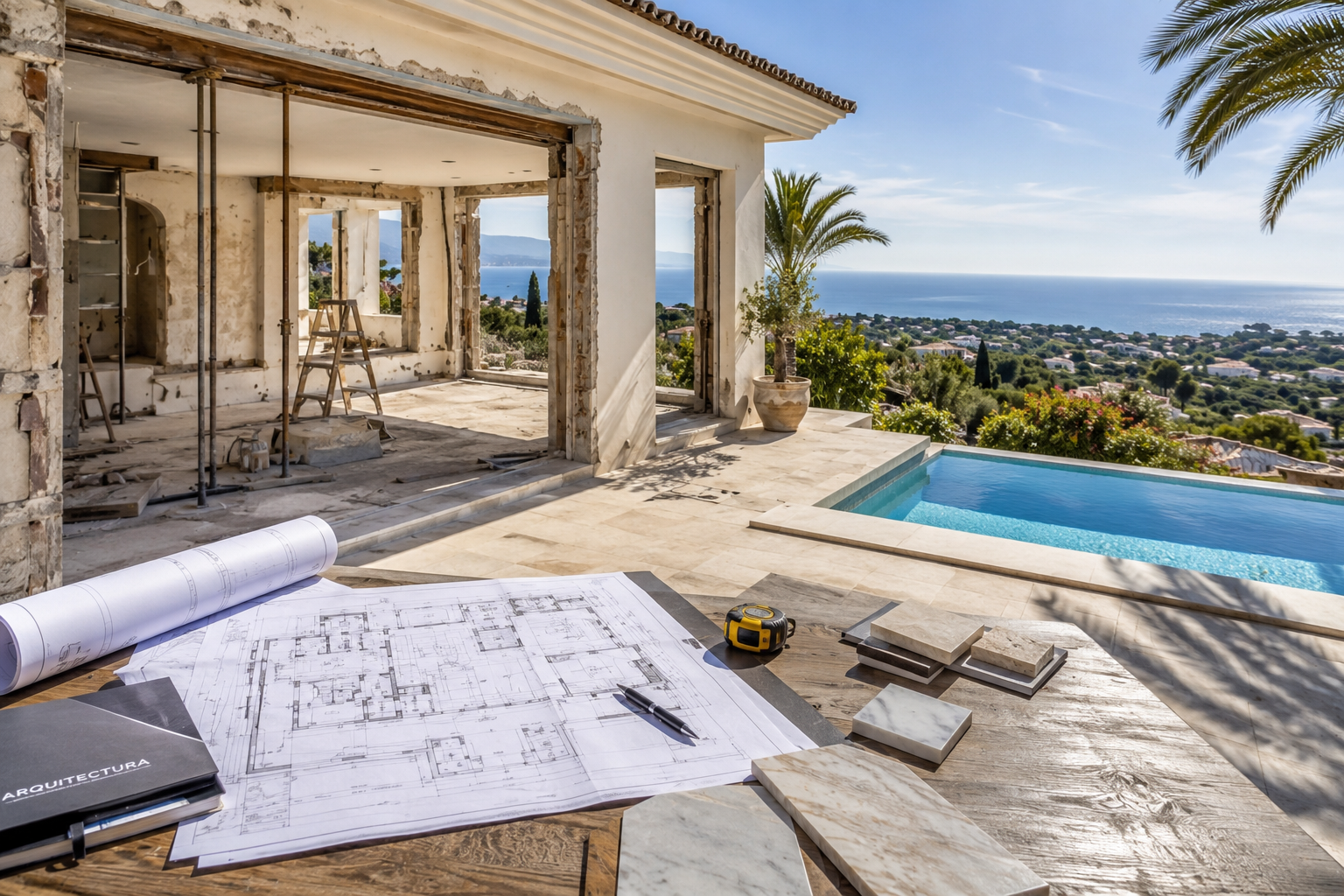
However, renovating property on the Costa del Sol is not the same as renovating in the UK or Northern Europe. The permit system, legal checks, planning regulations and contractor landscape are all different. Understanding the process before you buy can help you avoid expensive surprises and make better decisions from the outset.
This guide explains what foreign buyers need to know about Costa del Sol home renovations, including permits, renovation costs, contractor selection and the common mistakes to avoid.
Why Renovation Projects Remain Popular on the Costa del Sol
Despite the growing number of new developments across Marbella, Estepona and Benahavís, renovation projects remain highly sought-after.
Many of the Costa del Sol’s most desirable residential areas were developed decades ago. These established neighbourhoods often offer larger plots, mature gardens and prime locations close to beaches, golf courses, international schools and amenities.
For buyers who want a home tailored to their own tastes, purchasing a property with renovation potential can be more appealing than buying a finished property that still requires compromise.
Popular renovation goals include:
- Creating open-plan living spaces
- Modernising kitchens and bathrooms
- Adding home offices and gyms
- Installing swimming pools
- Improving outdoor entertaining areas
- Increasing energy efficiency
- Preparing properties for the luxury rental market
Before You Buy: A Costa del Sol Renovation Checklist
Before committing to any renovation property on the Costa del Sol, make sure you can answer “yes” to the following questions:
- Have you verified the property’s legal status?
- Have previous extensions or alterations been properly licensed?
- Have you checked community rules if it’s an apartment?
- Have you obtained preliminary renovation estimates?
- Do you understand the permit requirements?
- Have you allowed for a contingency budget?
- Has an independent lawyer reviewed the documentation?
Completing these checks before purchasing can save significant time, money and frustration later.
The First Question: Is the Property Legal?
One of the most important checks buyers should make before purchasing a renovation property in Marbella, Estepona or Benahavís is whether all existing structures and alterations are properly registered.
This is particularly important for older villas where previous owners may have added extensions, terraces, swimming pools or outbuildings over the years.
Just because something physically exists does not automatically mean it complies with local planning regulations.
Before committing to a renovation project, buyers should instruct an independent lawyer to verify:
- The property’s registration details
- Existing planning permissions
- Previous alterations
- Urban planning compliance
- Any potential legal issues affecting future renovations
Information about planning procedures can be found through the Marbella Town Hall Urban Planning Department and the relevant municipality where the property is located.
Can Non-Residents Renovate Property in Spain?
Yes. Non-residents can renovate property on the Costa del Sol just as Spanish residents can.
However, overseas owners often face practical challenges that local owners do not, particularly when managing contractors, permit applications and project timelines from abroad.
Many international buyers appoint an architect, project manager or trusted local representative to oversee works on their behalf.
If you plan to renovate a property while living overseas, make sure responsibilities are clearly defined from the beginning and that you receive regular updates throughout the project.
Understanding Building Permits on the Costa del Sol
Most Costa del Sol home renovations require some form of approval from the local town hall.
The exact requirements vary depending on the municipality and the scope of the work, but Spanish planning regulations generally distinguish between minor works and major works.
Minor Works (Obra Menor)
Minor works generally include:
- Bathroom renovations
- Kitchen upgrades
- Flooring replacement
- Electrical improvements
- Plumbing upgrades
- Interior decoration
Major Works (Obra Mayor)
Major works typically include:
- Structural alterations
- Building extensions
- Swimming pools
- Roof modifications
- Significant façade changes
- New construction
Major projects usually require technical plans prepared by a registered architect before approval can be granted.
Buyers can learn more about planning procedures through the Junta de Andalucía, which oversees regional planning regulations.
How Long Do Building Permits Take in Marbella and Estepona?
One of the biggest surprises for foreign buyers is how long permit approvals can take.
Minor works permits in Marbella can sometimes be processed within four to eight weeks, although timelines vary depending on workload and the nature of the project.
Major works involving structural changes, new swimming pools or full technical projects typically take between three and six months, and occasionally longer.
If a project requires additional approvals or involves protected areas, timelines can extend further.
This is why buyers should never plan renovation schedules around best-case scenarios.
Renovating an Apartment? Check Community Rules First
Apartment owners face an additional layer of regulation that villa owners often do not.
Many communities of owners have statutes that regulate what changes can be made to individual properties.
These rules may affect:
- Enclosing terraces
- Replacing windows
- Installing air conditioning systems
- Structural alterations
- External appearance changes
- Construction schedules during peak summer months
Before purchasing an apartment with renovation potential, request a copy of the community statutes and verify whether your plans are permitted.
How Much Does a Costa del Sol Renovation Cost?
Every renovation project is different, but buyers naturally want some idea of potential costs.
As a general guide, a cosmetic renovation in Marbella or Estepona may range from approximately €300–€600 per square metre.
A more comprehensive renovation involving new kitchens, bathrooms, windows and systems often falls between €600–€1,000 per square metre.
High-specification villa renovations with structural alterations, luxury finishes, landscaping and smart home technology can exceed €1,500 per square metre.
These figures are broad benchmarks only. Actual costs depend on the property’s condition, access, materials and project complexity.
In addition to construction costs, buyers should budget for building licence fees, architect fees and ICIO (Construction, Installations and Works Tax).
A useful overview of building permit costs can be found in this Idealista guide to building permit fees in Spain.
Always Include a Contingency Budget
Older Costa del Sol properties frequently reveal hidden issues once work begins.
Common examples include:
- Outdated electrical installations
- Plumbing problems
- Damp issues
- Insufficient insulation
- Structural defects
For this reason, many professionals recommend allowing an additional 10% to 20% contingency budget.
Choosing the Right Contractor
The contractor you select can have a greater impact on the success of your Costa del Sol renovation than almost any other factor.
Look for contractors who can demonstrate:
- Experience with Costa del Sol properties
- Relevant insurance cover
- Recent client references
- Detailed written quotations
- Knowledge of local regulations
- Transparent project management procedures
Be cautious of quotations that appear significantly cheaper than others. The lowest price often becomes the most expensive option if mistakes, delays or disputes arise later.
Why an Architect Is Often Essential
Many foreign buyers assume architects are optional. For major Costa del Sol renovations, they are often essential.
Architects typically help with:
- Preparing technical projects
- Planning applications
- Regulatory compliance
- Construction supervision
- Certification of completed works
Professional oversight can help protect both your investment and the long-term legality of the property.
Energy Efficiency Is Becoming More Important
Energy efficiency is now a major consideration for buyers across Marbella, Estepona and Benahavís.
Popular upgrades include:
- Solar panels
- Aerothermal heating systems
- Improved insulation
- Energy-efficient glazing
- Smart home technology
Energy performance is increasingly important because properties sold or rented in Spain require an Energy Performance Certificate (EPC).
Further information can be found through the Spanish Ministry of Housing and Urban Agenda.
Common Renovation Mistakes to Avoid
- Starting work before obtaining permits
- Failing to verify the property’s legal status
- Choosing contractors solely on price
- Ignoring community regulations
- Underestimating permit timelines
- Not allowing a contingency budget
Most renovation problems can be avoided through proper planning before work begins.
FAQ: Costa del Sol Home Renovations
Do I need an architect for a renovation in Spain?
For structural alterations, extensions, swimming pools and major works, a registered architect is normally required.
How long does a building permit take in Marbella?
Minor works may take four to eight weeks, while major projects often require three to six months or longer.
What is ICIO tax?
ICIO (Impuesto sobre Construcciones, Instalaciones y Obras) is a municipal tax applied to construction and renovation projects. The amount varies depending on the municipality and project budget.
Can I renovate a Costa del Sol property as a non-resident?
Yes. Non-residents can renovate property in Spain, although many choose to appoint architects or project managers to oversee works locally.
How much should I budget for unexpected renovation costs?
A contingency fund of 10% to 20% is generally recommended, particularly for older properties.
Thinking About Buying a Renovation Property on the Costa del Sol?
If you are looking at a property with renovation potential in Marbella, Estepona or Benahavís, talk to us before you commit.
At Marbella Homes to Love, we help buyers identify properties with genuine renovation potential and understand the opportunities, risks and likely costs before they move forward.
We can help you assess whether a project is legally sound, realistically priced and worth your time — before you spend money on surveys, architects or legal fees.
Explore our latest Marbella properties for sale, Estepona properties for sale and Benahavís properties for sale, or contact our team for expert guidance.